



Book Tickets Online
About
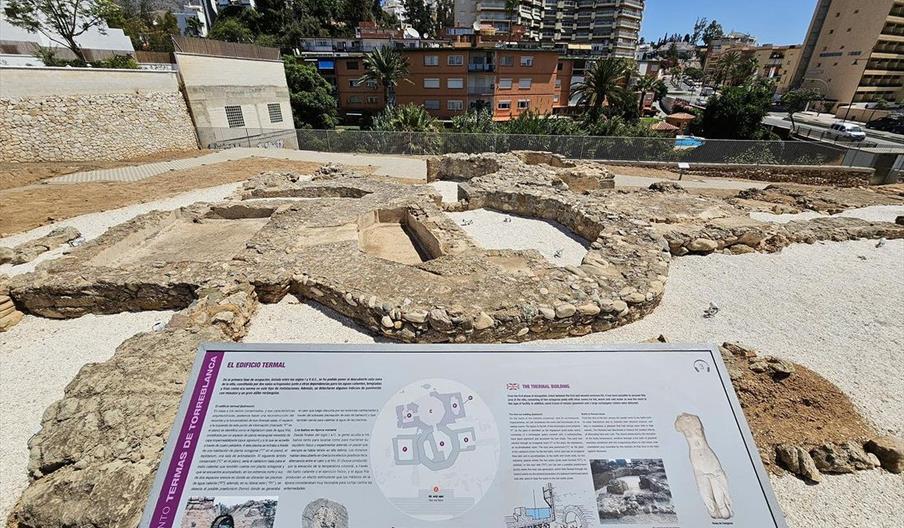
The Roman site of the Torreblanca Baths (2nd-6th century AD) was declared a BIC in 2005 by Decree of the Junta de Andalucía. The recent acquisition by the Fuengirola City Council in 2017 (it was previously privately owned) has allowed cleaning and conservation work to be carried out at the site and for it to become part of the archaeological heritage of the city.
The initial stage in the knowledge of this enclave, in the forties of the twentieth century, is marked by the detection of various "walls and buttresses" that are cut by the national road 340. A few years later, in 1961, the archaeological space, in which architectural elements belonging to a Roman baths can already be glimpsed, was subjected to various removals that endangered its existence.
It was not until 1982 that the decision was taken to undertake the first excavation and research work at the site, which would be continued with a second campaign in 1983.
It is made up of different facilities belonging to an architectural complex (thermal building and salting factory) and a necropolis. The chronology of these first structures corresponds to some baths from the second century AD. Although there are indications that refer to an earlier occupation, as early as the first century A.D. It was later converted into a salting factory and complemented by the production of purple dye. In the fifth century the place became a necropolis, which extended at least a century later.